
2.3× power at 8 m/s
Once the fabric retracts, output at 8 m/s rose from 550 W to 1,260 W.
Two pilot installations in Kerala: one on a city rooftop, one on a high-wind ridge in the Western Ghats. Four years of development and 4–5 machines built have taken the shape-changing turbine from the drawing board to the field.
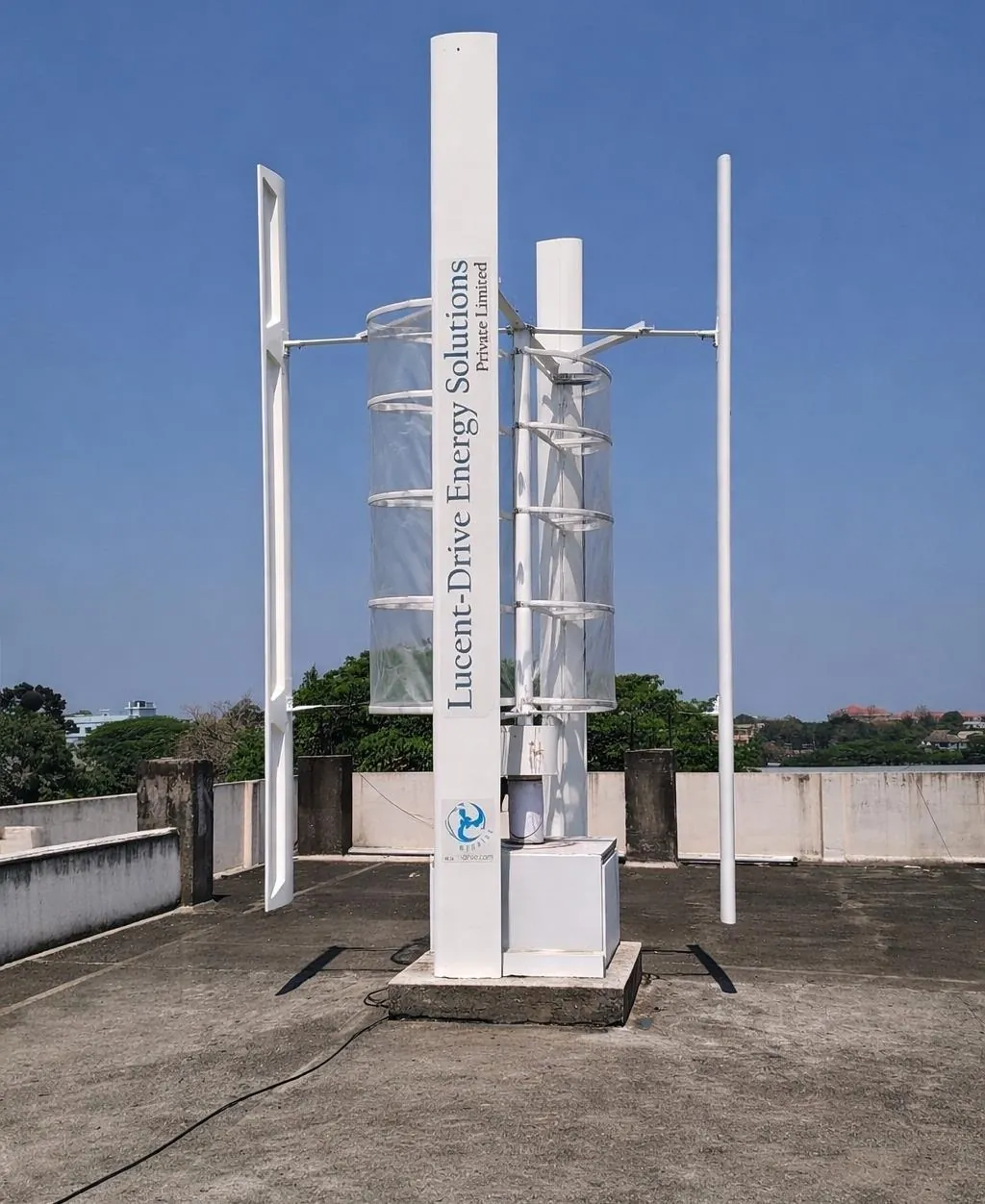
Our first pilot stands on a rooftop at CUSAT in Kochi, among buildings where wind is low and turbulent: exactly where fixed small turbines struggle to start.
Rooftop winds at this site were too low to validate lift mode. That is what the second pilot is for.
The rooftop installation in operation, and how the shape-changing rotor works. A good start if you want to learn about the technology.
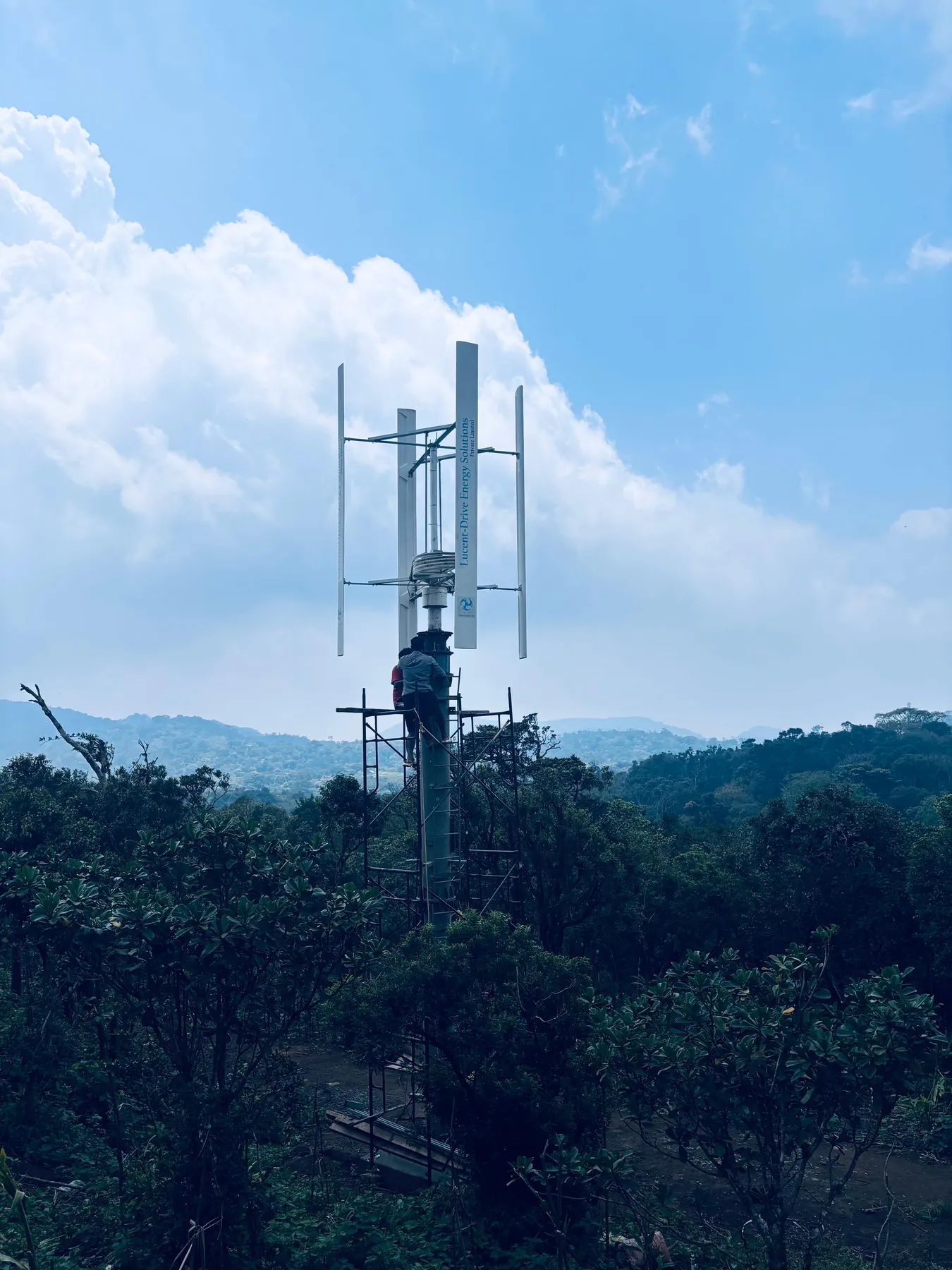
Our second pilot is pole-mounted on a high-wind ridge at Chathurangapara in Idukki, Kerala. Strong, steady wind lets us run the full sequence: drag start, retraction, and lift mode at speed.
Unedited footage from Chathurangapara: the turbine running in strong wind with the drag assembly retracted.
Measured where we have measured, modelled where we have not, and labelled either way.
Once the fabric retracts, output at 8 m/s rose from 550 W to 1,260 W.
More energy per year from the same rotor at a 5.5 m/s site.
Measuring kWh, uptime and cost per kWh at each site, including highway EV charging.